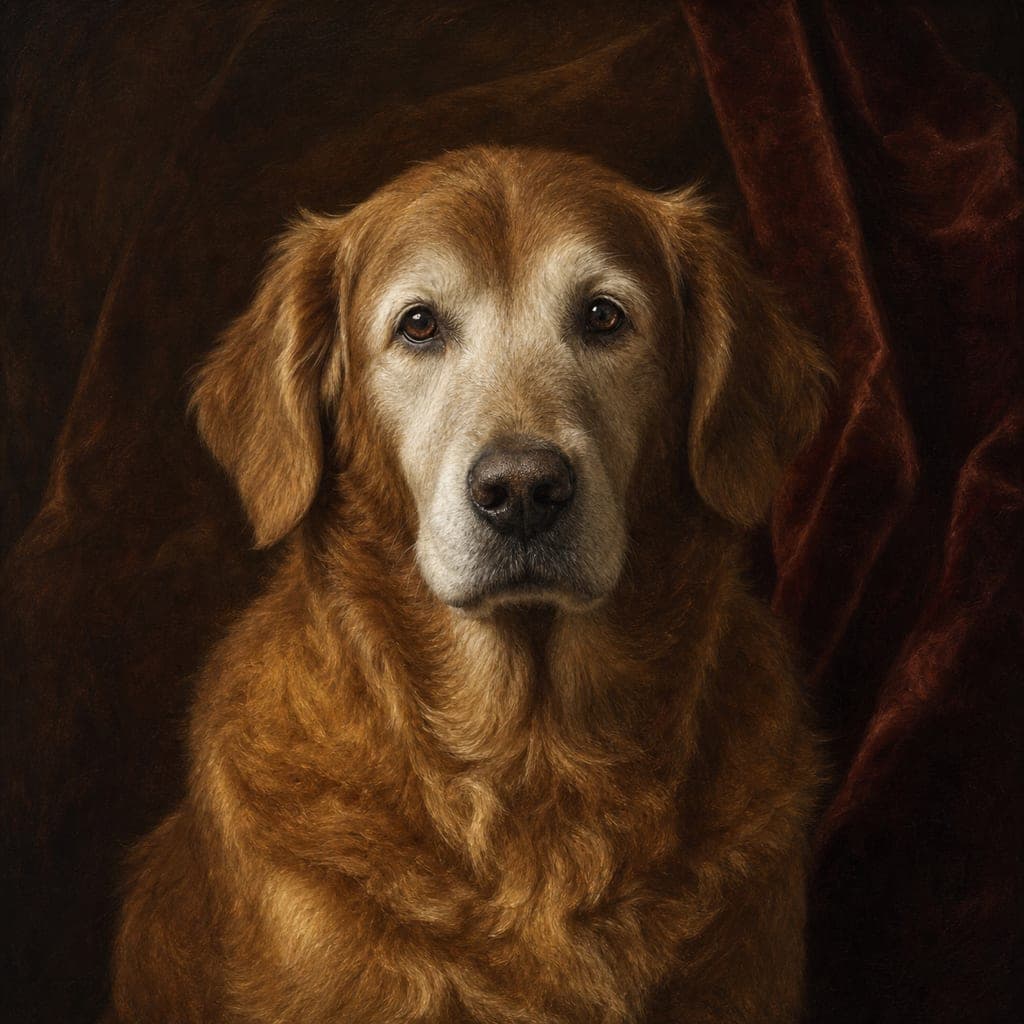
There is no single correct pet memorial. Some people want a portrait in the center of the room; others want a private box they can open when ready. Some need an immediate ritual, while others cannot look through photographs for months. Meaning comes from the relationship, not the size or visibility of the object.
The ideas below are options, not a checklist. Choose one that feels possible now and leave the rest. A memorial can change over time as grief changes.
Create a portrait or small photo display
Choose one photograph that captures the pet's real expression and print it in a simple frame. A dedicated memorial portrait can turn the same reference into warm, faithful gallery-style artwork. For a small display, pair the image with a collar, tag, favorite toy, or handwritten note rather than trying to fit every memory into one frame.
If selecting a photograph feels overwhelming, ask someone you trust to collect a short group of candidates without deleting or reorganizing anything. You can make the final decision later.
See your pet in a free preview
Upload one clear photo, pick a character, and judge the likeness yourself before paying anything.
Build a memory box or digital archive
A memory box can hold tags, adoption paperwork, photographs, a piece of a favorite blanket, condolence notes, and written stories. Use archival sleeves for irreplaceable paper and keep organic items only when they can be stored safely.
A digital archive is equally valid. Copy original photographs and videos into a clearly named folder, preserve their original dates, and create a second backup. Invite family members to add their own files rather than relying on a single phone or social account.
Choose a living or outdoor memorial
Plant a pet-safe tree, shrub, or container garden; place a small stone or marker in a favorite outdoor spot; or dedicate a bench where the pet used to rest. Consider climate, property rules, wildlife, and the toxicity of plants to animals still living in the home.
An outdoor memorial does not need to hold remains or include dates. A quiet place associated with walks, sun, or play can carry the memory without announcing it. Our pet memorial garden guide covers practical planning and portable alternatives.
Use action as remembrance
Donate supplies or funds to a rescue, sponsor an adoption fee, support veterinary assistance, or volunteer when you have the capacity. Choose an organization whose work you understand, and do not feel obligated to make the amount public.
You can also repeat an activity the pet loved: walk a familiar route, visit a quiet place, cook a meal for the people who helped, or write down one memory on each anniversary. A memorial does not need to be an object to be real.
Include other people without surrendering control
Family members may grieve differently. Offer choices: contribute a photograph, write a story, attend a small gathering, or remember privately. Children may want to draw, choose a frame, or create a simple book, but adults should not require a public performance of emotion.
If you are creating something for a grieving friend, ask permission before using their pet's photograph or publishing a tribute. The sympathy-message guide can help with the accompanying note.